The Chilling Mystery of the Hanging Ghost: Tales of the Unexplained

Table of Contents
- The Haunting Legend of the Hanging Ghost
- Origins and Cultural Variations of the Hanging Ghost
- Why Does the Hanging Ghost Appear?
- Famous Encounters with the Hanging Ghost
- The Psychological Impact of Sightings
- How to Protect Yourself from the Hanging Ghost
- Debunking the Hanging Ghost: Science vs. Superstition
- Embracing the Mystery: Why the Hanging Ghost Endures
- Final Thoughts: Are You Brave Enough to Face the Hanging Ghost?
The Haunting Legend of the Hanging Ghost
The world is filled with countless ghost stories, each more terrifying than the last. Among these tales, one legend stands out for its sheer eerie presence—the Hanging Ghost. Unlike typical apparitions that drift through walls or whisper in the dark, the Hanging Ghost is said to be suspended in mid-air, often near doorways, staircases, or even in the corners of rooms. Witnesses describe it as a shadowy figure with hollow eyes, dangling limbs, or a tattered cloak that seems to float without any visible support. But what makes this ghost so terrifying? And why does its legend persist across cultures and centuries? Let’s delve into the unsettling world of the Hanging Ghost and uncover the secrets behind its haunting presence.
Origins and Cultural Variations of the Hanging Ghost
The concept of a ghost that appears to be hanging isn’t limited to a single culture or region. Instead, it has roots in folklore from around the globe, each with its own unique twist. In Japanese folklore, the Kuchisake-onna (Slit-Mouthed Woman) is sometimes depicted in a manner that evokes the Hanging Ghost, lurking in doorways or hanging upside down from ceilings. Meanwhile, in Western traditions, the Hanging Ghost is often associated with tragic deaths—such as suicides or unsolved murders—where the spirit remains trapped in a state of limbo, unable to move forward.
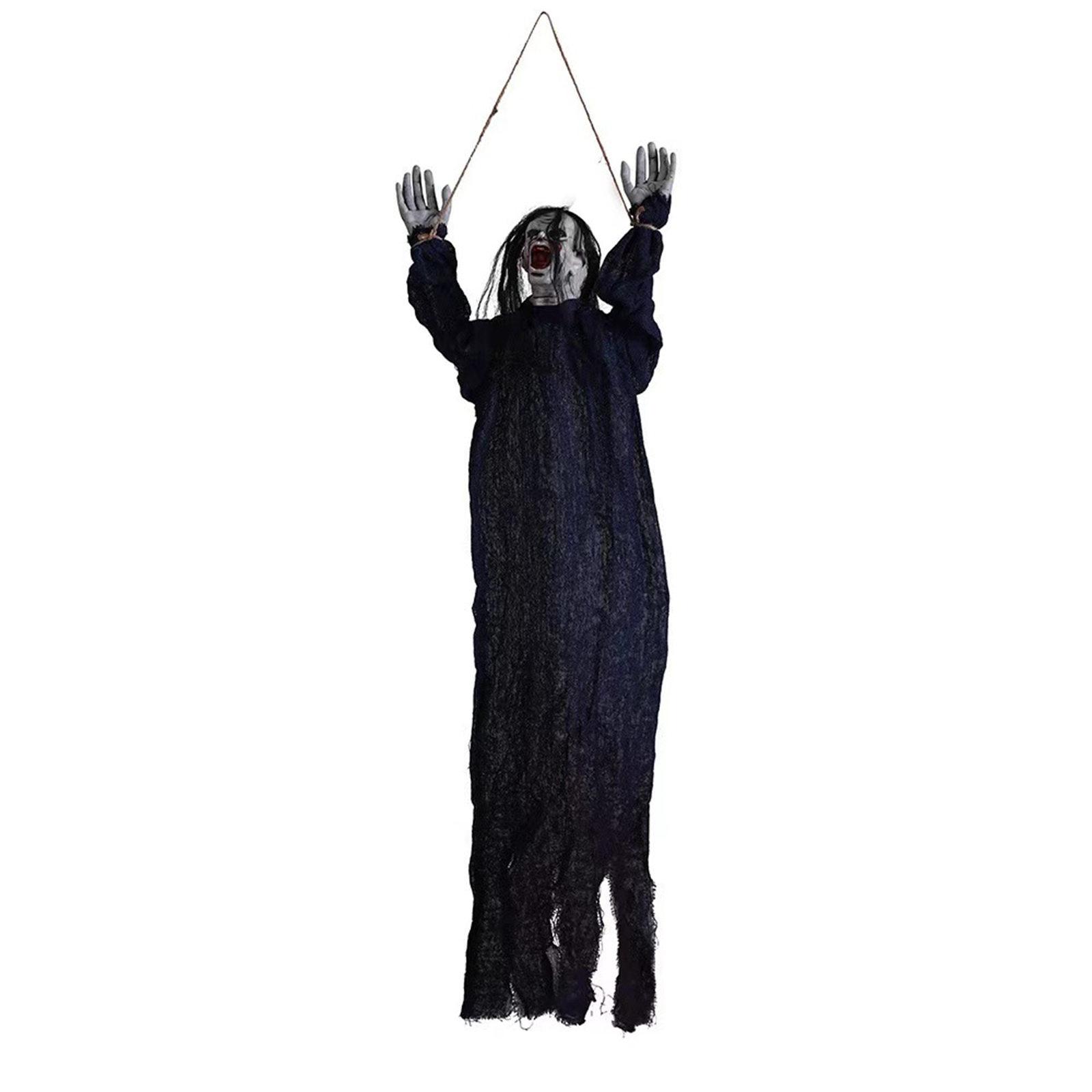
One of the most famous accounts comes from European ghost lore, where the Hanging Ghost is believed to be the spirit of someone who died violently or under mysterious circumstances. Some legends suggest that these ghosts are bound to a specific location, forever replaying the moment of their death. In other cultures, the Hanging Ghost is seen as a warning—a sign that something sinister is about to occur. For example, in some African traditions, a hanging figure is interpreted as an omen of impending doom or a curse upon a household.
Why Does the Hanging Ghost Appear?
Psychologists and paranormal researchers offer various theories to explain the phenomenon. One popular belief is that the Hanging Ghost represents the unresolved emotions of the deceased. If a person dies suddenly or violently, their spirit may become stuck in a state of shock, manifesting physically in a way that reflects their final moments. Another theory suggests that the Hanging Ghost is a form of residual energy, a replay of a traumatic event that occurred in a particular place. Unlike intelligent hauntings, where ghosts interact with the living, residual hauntings are more like recorded echoes of the past.
Some skeptics argue that the Hanging Ghost is merely a trick of the light or a psychological phenomenon. For instance, pareidolia—the brain’s tendency to perceive familiar patterns in random stimuli—could explain why people see a hanging figure in shadows or dimly lit spaces. However, for those who claim to have encountered the Hanging Ghost, the experience is anything but random. Many describe feeling an overwhelming sense of dread, a drop in temperature, or even physical sensations like being watched or touched.
Famous Encounters with the Hanging Ghost
Throughout history, there have been numerous accounts of people encountering the Hanging Ghost, each more unsettling than the last. One of the most well-documented cases comes from the Stanley Hotel in Colorado, famously linked to Stephen King’s The Shining. Guests and staff have reported seeing a shadowy figure hanging from the ceiling in one of the rooms, only to vanish when approached. Another chilling encounter occurred in England’s Blackwood House, where visitors claimed to see a ghostly figure dangling from the rafters, its face contorted in agony.
In Asia, the Hotel Okura in Tokyo is said to be haunted by a Hanging Ghost that appears near the elevator. Guests describe feeling an icy breeze and hearing faint sobbing before catching a glimpse of a pale figure suspended in the air. Similarly, in China’s Ghost Street in Hong Kong, locals speak of a hanging spirit that materializes during full moons, its hollow eyes staring directly at passersby.
The Psychological Impact of Sightings
Encounters with the Hanging Ghost often leave witnesses with lasting psychological effects. Many describe feeling an inexplicable sense of dread, as if they’ve been marked by an unseen force. Some even report sleep disturbances, nightmares, or an inability to return to the location where they saw the ghost. This raises an important question: Is the Hanging Ghost a real entity, or is it a manifestation of our deepest fears?
Parapsychologists suggest that the brain’s amygdala, which processes fear and emotion, may play a role in these encounters. When faced with an unexplained figure, the amygdala triggers a fight-or-flight response, leading to heightened anxiety and even hallucinations. However, for those who are genuinely convinced they’ve seen a Hanging Ghost, the experience is often life-changing, blurring the line between reality and the supernatural.
How to Protect Yourself from the Hanging Ghost
If you’re concerned about encountering a Hanging Ghost—or any other malevolent spirit—there are steps you can take to protect yourself. While there’s no scientific proof that these methods work, many who claim to have been haunted swear by them:
- Use protective symbols: In many cultures, drawing pentagrams, crosses, or other sacred symbols on doorways and windows is believed to ward off evil spirits.
- Keep salt or iron nearby: Salt is often considered a purifying agent, while iron is thought to repel negative energy. Placing a small bag of salt in your pocket or keeping an iron object (like a knife or nail) on hand may offer protection.
- Avoid dark or isolated spaces: The Hanging Ghost is often associated with abandoned buildings, basements, and other dimly lit areas. If you’re exploring such places, bring a flashlight and stay in well-lit, open spaces.
- Practice meditation or grounding techniques: Some believe that maintaining a calm, centered state can make you less susceptible to negative energies. Techniques like deep breathing or visualization may help keep your mind focused.
- Seek professional help if needed: If encounters with the Hanging Ghost are causing severe anxiety or distress, consulting a therapist or counselor can provide support and coping strategies.
It’s also worth noting that some cultures believe that showing respect to the dead can prevent hauntings. Leaving offerings, such as food or flowers, may help appease restless spirits and keep them from causing harm.
Debunking the Hanging Ghost: Science vs. Superstition
While the legend of the Hanging Ghost is deeply rooted in folklore, science offers alternative explanations for these eerie sightings. One possibility is infrasound, low-frequency sound waves that are inaudible to humans but can induce feelings of unease, dizziness, and even hallucinations. Some haunted locations may naturally produce infrasound, leading people to perceive ghosts or shadowy figures.
Another scientific explanation is carbon monoxide poisoning. In poorly ventilated spaces, carbon monoxide buildup can cause dizziness, blurred vision, and even visual hallucinations—symptoms that could mimic a ghostly encounter. Additionally, sleep paralysis, a phenomenon where a person is temporarily unable to move or speak while falling asleep or waking up, can lead to vivid hallucinations, including shadowy figures or the sensation of being touched.
However, for those who genuinely believe in the supernatural, these explanations may feel like an attempt to dismiss their experiences. The Hanging Ghost remains a powerful symbol of the unknown, a reminder that some mysteries may never be fully solved. Whether you view it as a psychological phenomenon or a genuine spiritual entity, the legend of the Hanging Ghost continues to captivate and terrify us.
Embracing the Mystery: Why the Hanging Ghost Endures
The allure of the Hanging Ghost lies in its ambiguity. Unlike friendly ghosts or well-documented apparitions, the Hanging Ghost represents the unknown—the unseen forces that lurk just beyond our understanding. Its ability to adapt across cultures and centuries ensures that its legend will never fade. For some, it serves as a cautionary tale, a warning to tread carefully in the world of the supernatural. For others, it’s a source of fascination, a reminder that there are still mysteries waiting to be uncovered.
As we continue to explore the boundaries between science and spirituality, the Hanging Ghost remains a chilling enigma. Whether it’s a trick of the mind, a residual echo of the past, or a genuine spiritual presence, one thing is certain: the legend of the Hanging Ghost will continue to haunt our imaginations for generations to come.
Final Thoughts: Are You Brave Enough to Face the Hanging Ghost?
If you’ve ever felt a sudden chill in an empty room, heard footsteps when no one’s there, or caught a glimpse of a shadow where there should be none, you might have encountered the Hanging Ghost. The question isn’t whether these encounters are real—it’s what you choose to believe. Whether you see the Hanging Ghost as a warning, a remnant of the past, or a product of the human mind, its legend serves as a reminder that the world is far stranger—and far more mysterious—than we often realize.
So next time you find yourself in a dimly lit hallway or an old, abandoned building, take a moment to look up. You never know what—or who—might be hanging in the shadows.
Leave a Comment
Comments are moderated before appearing. The data you submit is processed according to the Privacy Policy of n8n.unfabled.co.